A strong product needs recognition to build market share. Visual identity is how you speak to potential clients. It builds trust before a sales conversation starts.
This is crucial for B2B brands seeking long-term growth. It makes your solution instantly recognizable. It separates credible brands from fleeting experiments.
Many emerging companies mistake visual identity for just a logo. In reality it is a comprehensive system. It includes typography and color psychology. This system ensures every touchpoint reinforces trust.
Why Do New Brands Struggle with Consistency?
Most founders know they need good design. Yet inconsistency kills equity for early-stage brands. The issue is usually a lack of strategic foundations.
Without rules your marketing materials become a mix of styles. This dilutes the company’s perceived value. It creates a fractured image in the marketplace.
Disconnected Design Decisions
Decisions often happen in isolation. One freelancer builds the site. Another designs the pitch deck. A third handles social assets.
The result is a fractured brand. One asset looks playful while another looks corporate. This confuses potential buyers.
You lose credibility if LinkedIn looks different from a proposal. Every platform must tell the same story.
Skipping the Strategy Phase
Design without strategy is just decoration. New brands often rush into aesthetics. They choose colors simply because they look nice.
This might signal the wrong price point. A cybersecurity firm should not use soft pastels. It fails to convey authority or protection. Every choice must align with market intent.
Is Your Visual Identity Scalable?
Designing only for today is a trap. A logo might look good on a business card. But does it work as a tiny app icon?
Rigid systems limit future expansion. A complex logo fails on monochrome merchandise. This forces costly rebrands too early. You need a system that grows with you.
The Strategic Visual Identity Design Process
Building an identity is a linear process. It translates business goals into visual assets. You must move from abstract concepts to concrete deliverables.
Step 1: Brand Discovery and Auditing
The first step is listening rather than sketching. We dive into the brand’s core purpose. We analyze the target audience and competitors.
We answer fundamental questions first. Who are we influencing? What emotions should we evoke? Where are competitors visually weak?
A calculated color shift can create differentiation. If the market is blue we might choose green. This ensures every choice is backed by data.
Step 2: The Core Visual Elements
Strategy must translate into visual pillars. These elements form the toolkit for your marketing team.
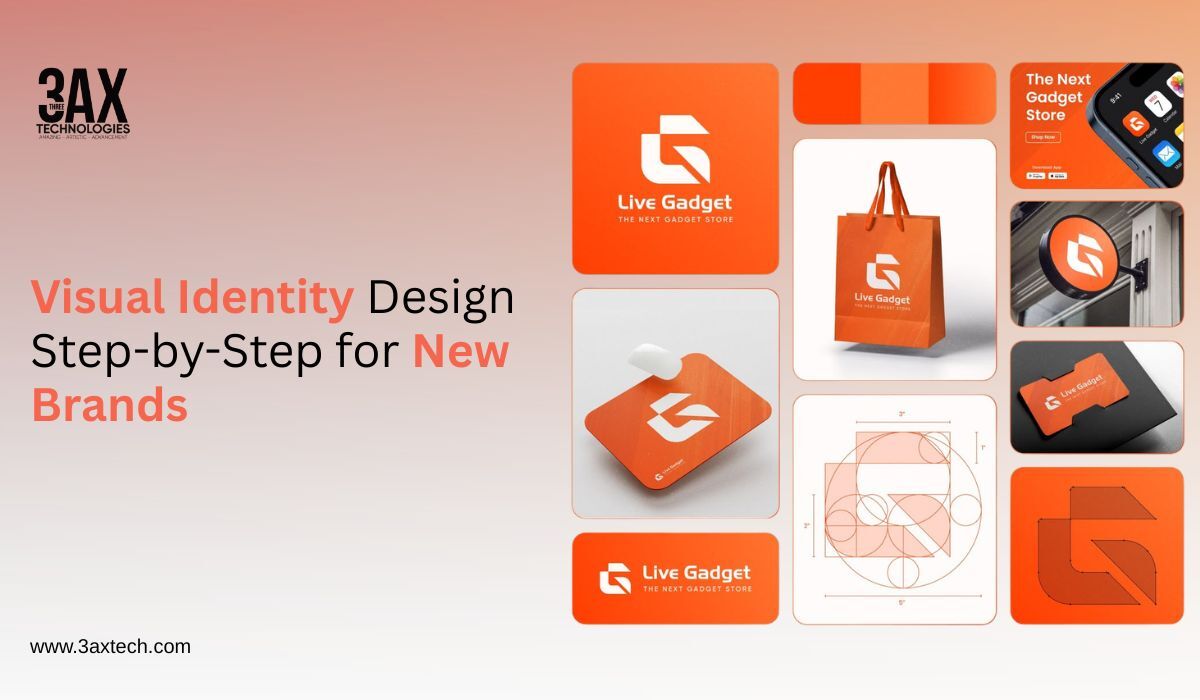
- Logo and Marks: You need more than one logo. A system includes secondary marks and favicons. It must work on billboards and browser tabs.
- Color Systems: A primary palette handles recognition. A secondary palette offers flexibility. This helps with data visualization and UI accents.
- Typography: Type communicates tone. Geometric fonts suggest precision. Serif fonts suggest heritage. They must be legible across all devices.
Step 3: Developing the Design System
Consistency requires a system. This phase creates the rules for interaction. It defines the safe space around a logo.
It sets filters for photography to ensure a unified look. It establishes grid systems for layouts. This creates a visual language for the brand.
How Do We Document These Rules?
The final output is the Brand Guidelines. This is the source of truth for the organization. It provides clear instructions on strict usage.
It stops teams from stretching logos. It prevents the use of off-brand colors. This keeps brand integrity intact as you scale.
How 3AX Tech Elevates Brand Presence
At 3AX Tech we view design as a growth engine. We act as partners rather than just designers. Design is an investment that must yield returns.
Our team integrates with your business goals. We build identities that are striking and functional. We ensure they support your commercial objectives.
Our Branding and Creative Solutions go deep. We align visual strategy with our Digital Marketing expertise. We think about performance from day one.
We consider how a logo looks in Google Ads. We analyze how UI/UX impacts your website. We ensure assets translate well into video content.
You might need a full Brand Identity Strategy. Or perhaps high-conversion UI/UX Design. Our portfolio supports your commercial growth.
We optimize assets for speed and performance. We create cohesive creatives that drive engagement. We ensure your brand looks professional everywhere.
Transforming Identity into Market Impact
Visual identity is a tool for building relationships. It is not a static asset. A consistent presentation increases client confidence.
It proves your ability to deliver results. Disjointed branding creates friction. It fails to communicate your true sophistication. We can help align your visuals with your market potential.
What is visual identity design?
Visual identity design is the collection of visual elements that represent a brand, including logos, colors, typography, imagery, and design systems that create a consistent brand presence.
Why is visual identity important for new brands?
A strong visual identity builds trust, improves recognition, differentiates your business from competitors, and helps customers remember your brand.
How is visual identity different from a logo?
A logo is only one part of a visual identity. Visual identity also includes color palettes, fonts, graphics, imagery styles, and brand guidelines used across all platforms.
How long does it take to create a visual identity?
Most professional visual identity projects take between 2 to 8 weeks depending on research, revisions, brand complexity, and deliverables required.
What should be included in brand guidelines?
Brand guidelines typically include logo usage rules, color codes, typography standards, image styles, spacing requirements, and examples of correct brand application.